




How Stress Makes Dog Behaviour Worse (And How to Fix It Fast)
Behaviour problems rarely come out of nowhere...
Most of the time, when a dog starts barking more, reacting faster, struggling to settle, or behaving in ways that feel impulsive or unpredictable, there’s something building beneath the surface long before the behaviour changes.
That “something” is often stress.
Stress itself isn’t the enemy. A certain amount of stress is normal, and in small doses it’s even healthy. The problem begins when stress isn’t regulated, released, or allowed to come back down. When that happens, stress quietly reshapes a dog’s nervous system and behaviour starts changing as a result.
To understand why behaviour escalates, we need to understand how stress works, what it looks like in daily life, and why lowering it is often the fastest way to create meaningful change.
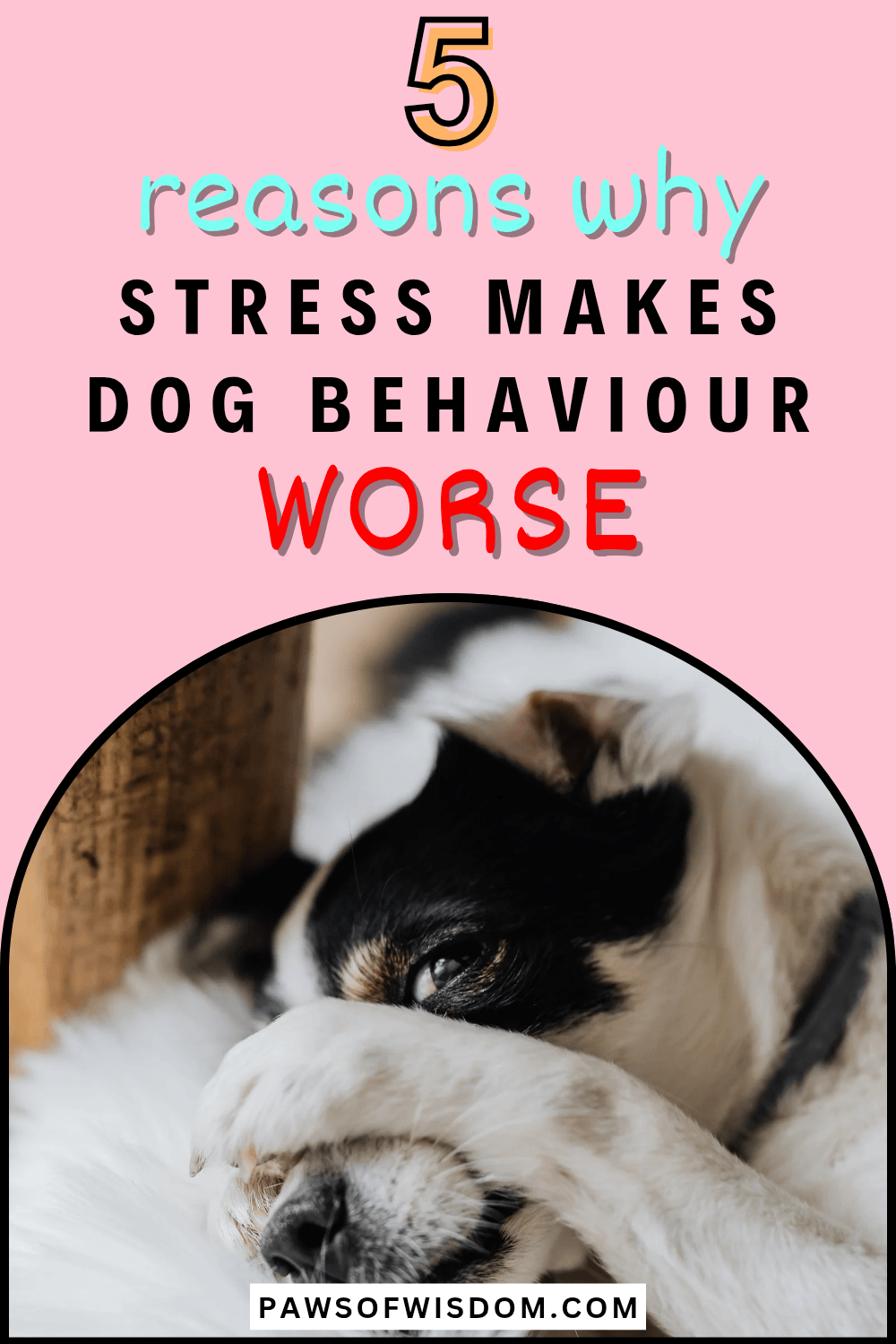
The Two Types of Stress That Shape Behaviour
Not all stress is the same.
Understanding the difference between acute stress and chronic stress is key to making sense of your dog’s behaviour.
Acute Stress: The Immediate Spike
Acute stress is short-term, in-the-moment stress. It’s the immediate spike you see when something startles, alarms, or overwhelms your dog.
Common examples include:
fireworks or sudden loud noises
a stranger or dog appearing unexpectedly
new or unfamiliar environments
abrupt changes to routine
When acute stress hits, the system reacts immediately.
You’ll often see fast, obvious behavioural changes such as barking, lunging, whining, pacing, frantic scanning, or tense body language.
In many cases, once the trigger disappears, the stress response settles too.
The issue is that many owners focus only on controlling the reaction, rather than recognising the stress response underneath it.
Chronic Stress: The Silent Catalyst Of Chaos
Chronic stress is where most long-term behaviour problems are born.
Unlike acute stress, chronic stress builds slowly. It accumulates over days, weeks, or even months, often from things that seem completely normal on their own.
Common contributors include:
lack of deep, restorative rest
inconsistent routines and unpredictability
repeated stimulation with no decompression
constant arousal in the home environment
frequent acute stress that never fully drains
Over time, this accumulation raises your dog’s internal baseline. In simple terms, their nervous system starts each day already closer to overload.
When that baseline is high, everything becomes harder. Dogs become more reactive, more irritable, less tolerant, and far less able to settle. Behaviour that once seemed manageable suddenly feels constant and exhausting.
This is why chronic stress is so dangerous — it quietly erodes coping capacity long before owners realise what’s happening.
How Stress Actively Makes Behaviour Worse
Stress doesn’t just appear alongside behaviour problems. It actively creates the conditions that allow them to grow.
Here’s how...
#1 - Stress Lowers Your Dog’s Reaction Threshold
When stress levels are elevated, it takes very little to push a dog into a reaction. Owners often describe this as behaviour happening “out of nowhere,” but in reality, the system was already primed. Stress shortens the distance between trigger and response.
A dog with a low threshold isn’t choosing to overreact...they simply don’t have enough regulation left to pause, assess, or cope.
#2 - Stress Blocks Learning and Training
A stressed system cannot learn effectively.
When stress is high, the brain prioritises survival over thinking. This makes it extremely difficult for dogs to focus, process information, or respond to cues (even ones they “know”).
This is why stressed dogs are often labelled as:
stubborn
distracted
disobedient
unfocused
In most cases, the issue isn’t training. It’s overload...until stress comes down, learning simply won’t stick.
#3 - Stress Doesn’t Reset Overnight
Without active regulation and recovery, stress hormones can take days to fully clear. That means a stressful day yesterday often affects behaviour today (and sometimes tomorrow).
This is why behaviour can feel inconsistent. Owners assume each day starts fresh, but without regulation, recovery or management...the chaos stays high.

#4 - Stress Fuels The Unholy Trinity
Stress is one part of what I call the Unholy Trinity:
stress
frustration
arousal
When these three overlap, dysregulation becomes almost inevitable. Dogs become tense, easily triggered, and unable to recover properly.
#5 - Stress Turns Coping Strategies Into “Bad Behaviour"
Many behaviours we label as problems are actually attempts to cope...
Chewing relieves tension.
Digging releases energy.
Barking offloads intensity.
Repetitive movement burns stress hormones.
When stress is reduced, many of these fade naturally because the dog no longer needs them.
Why Lowering Stress Is the Fastest Path Forward
If stress lowers thresholds, blocks learning, fuels arousal, and builds frustration, then reducing stress isn’t optional...it’s step one.
By reducing stress...
thinking becomes clearer
reactions slow
settling becomes easier
behaviour stabilises
This is why stress reduction sits at the core of the work done inside Paws of Wisdom. Without it, every other intervention has to fight uphill.
Is your dog stuck in chronic stress...or heading that way?
Chaos constantly building...
Always on edge...
Reactive more often than not...
Unable to properly settle or switch off...
Struggling to cope with everyday life and needing constant management just to get through the day.
If this sounds familiar, a Detox may be exactly what your dog needs.

Final Thoughts
Stress doesn’t always announce itself loudly. Most of the time, it builds quietly by shaping behaviour long before owners realise what’s happening.
But when you start lowering the overall load and supporting regulation, change often comes faster and more cleanly than expected.
Lower the load, reset the baseline, and behaviour finally has space to shift.
A FREE community with downloadable guides and resources, and people who get it.
A simple and structured reset for overstimulated, dysregulated, chaotic dogs.
Simple, clear guidance to help you understand your dog through a regulation-first lens.


